How Does Aggregate Gradation (5-20mm) Impact Concrete Mix Designs for Construction?
Timp:
14 November 2025
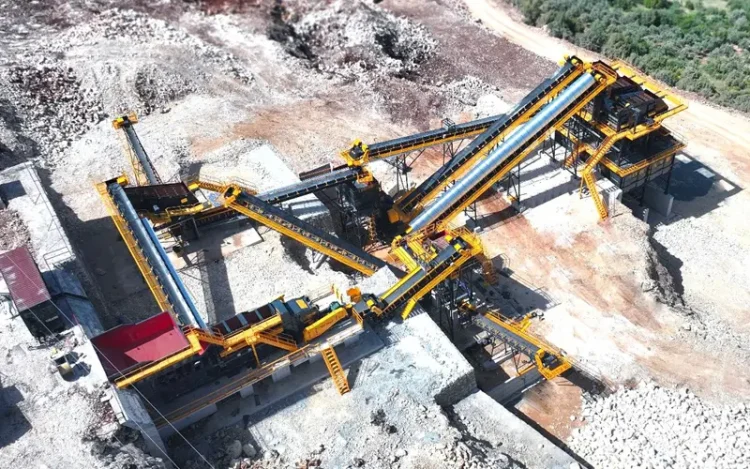
Aggregate gradation, specifically the size range of 5-20mm, plays a crucial role in concrete mix designs and significantly affects the properties, performance, and overall quality of the concrete in construction. Here’s how aggregate gradation impacts concrete:
1. Lucrabilitate
- Proper gradation ensures a balanced mix of coarse aggregates (e.g. 5-20mm) and fine aggregates. When aggregates are well-graded, they improve the flowability and ease of working with the concrete during mixing, placing, and finishing.
- Poor gradation leads to segregation or bleeding, where the aggregates separate, or excess water rises to the surface. Proper gradation avoids such issues.
2. Strength and Durability
- Gradation impacts the particle packing, ensuring minimal voids between aggregates and leading to higher density in the concrete mix.
- Well-graded aggregates reduce the need for excess cement paste (binder), resulting in stronger and more durable concrete. Over-sized or poorly graded aggregates reduce bond strength and compromise durability.
3. Permeability and Shrinkage
- Proper gradation reduces void spaces in the concrete, decreasing the permeability and water ingress. This prevents issues like reinforcement corrosion and improves resistance to freeze-thaw cycles.
- Inadequate gradation can create a higher cement paste content, which increases shrinkage and cracking risks.
4. Economy
- A proper combination of 5-20mm aggregate sizes allows the use of less cementitious material while still achieving desired strength, reducing costs.
- Conversely, poorly graded aggregates require additional cement and water to compensate for voids, increasing costs.
5. Aggregate Interlocking
- Coarse aggregates (5-20mm) interlock with cement paste and fine aggregates, providing the skeleton for the concrete structure.
- Uniform distribution of aggregate sizes prevents inconsistencies, improving load-bearing capabilities and reducing weak zones.
6. Compaction and Finishing
- Well-graded aggregates simplify compaction by reducing voids and ensuring optimal density.
- Proper gradation also facilitates finishing, as bleeding and segregation risks are minimized.
Considerații practice
When designing a concrete mix:
- Follow relevant standards or codes (e.g., ASTM, BS EN, IS codes) for aggregate gradation to meet construction specifications.
- Conduct sieve analysis to ensure the aggregate size distribution aligns with the required gradation curves for the mix.
- Balance the proportions of coarse and fine aggregates relative to the designed water-cement ratio and desired strength.
In summary, the 5-20mm aggregate gradation enables efficient particle packing, minimizes voids, enhances workability, and contributes to durable and cost-effective concrete mixes. Proper gradation is a cornerstone of achieving optimal concrete performance in construction applications.
Contact Us
Shanghai Zenith Mineral Co., Ltd. is a leading manufacturer of crushing and grinding equipment in China. With more than 30 years of experience in the mining machinery industry, Zenith has built a strong reputation for delivering high-quality crushers, mills, sand-making machines, and mineral processing equipment to customers around the world.
Headquartered in Shanghai, China, Zenith integrates research, production, sales, and service, providing complete solutions for aggregates, mining, and mineral grinding industries. Its equipment is widely used in metallurgy, construction, chemical engineering, and environmental protection.
Committed to innovation and customer satisfaction, Shanghai Zenith continues to advance in intelligent manufacturing and green production, offering reliable equipment and comprehensive after-sales service to help clients achieve efficient and sustainable operations.
website: https://www.chinagrindingmill.net
E-mail:info@chinagrindingmill.net
Whatsapp:+8613661969651