info@chinagrindingmill.net
+8613661969651
english En
English 中文版 Hindi Spanish French Arabic Bengali Russian Portuguese Indonesian Urdu German Japanese Swahili Turkish Italian Korean Vietnamese Tamil Punjabi Persian (Farsi) Thai Dutch Polish Ukrainian Romanian Greek Hebrew Swedish Czech Hungarian Danish Finnish Norwegian Malay Tagalog (Filipino) Gujarati Kannada Burmese Amharic Hausa Somali Yoruba Zulu Afrikaans Nepali Sinhala Khmer Lao Mongolian Javanese Telugu Marathi Malayalam Uyghur
SHANGHAI ZENITH MINERAL CO.,LTD. SHANGHAI ZENITH MINERAL CO.,LTD.
  • Home
  • About
  • Products
    Mobile CrusherStone CrusherGrinding MillsModular CrushersMining Equipment
  • Cases
  • Solutions
  • Library
  • Contact
  • Quote Now
  • Home
  • Downloads
  • What is gradation in a crusher

What is gradation in a crusher

Time:12 September 2025
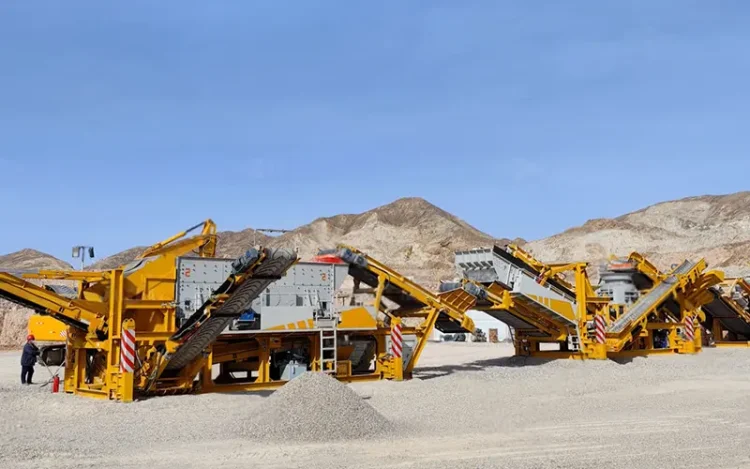
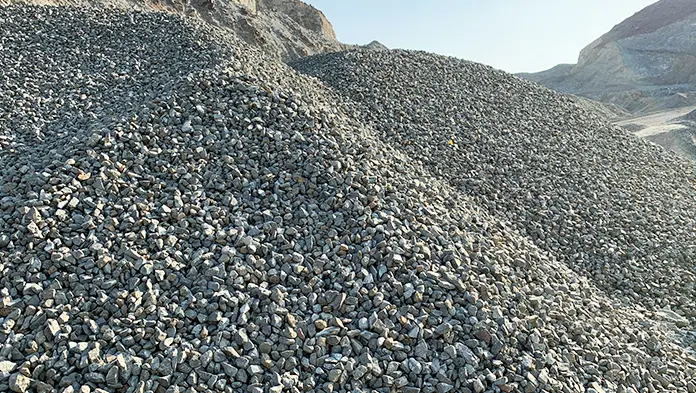
Gradation in a crusher refers to the distribution of particle sizes in a given aggregate sample. It is a critical factor in determining the quality and performance of the aggregate material, which is used in various construction applications, such as concrete, asphalt, and road base materials. Understanding gradation helps in optimizing crusher operations and ensuring the desired material properties.

Importance of Gradation

Gradation plays a vital role in:

  • Strength and Stability: Proper gradation ensures that aggregates interlock effectively, providing strength and stability to the final product.
  • Workability: It affects the ease with which concrete or asphalt can be mixed, placed, and compacted.
  • Durability: Well-graded aggregates lead to more durable construction materials, reducing maintenance and repair costs.
  • Economy: Optimizing gradation can reduce the need for additional materials, thus lowering costs.

Gradation Parameters

Gradation is characterized by several parameters:

  1. Particle Size Distribution (PSD): The range of particle sizes present in the aggregate.
  2. Fineness Modulus (FM): An index number that represents the mean size of the particles in a sample.
  3. Uniformity Coefficient (Cu): A measure of the range of particle sizes and their distribution.
  4. Coefficient of Gradation (Cc): Indicates the smoothness of the gradation curve.

Gradation Curves

Gradation is often represented graphically using a gradation curve, also known as a particle size distribution curve. This curve is plotted with:

  • X-axis: Particle size (usually on a logarithmic scale)
  • Y-axis: Cumulative percentage passing or retained

Types of Gradation

  1. Well-Graded: A smooth gradation curve with a wide range of particle sizes.
  2. Poorly-Graded: A steep curve indicating a narrow range of particle sizes.
  3. Gap-Graded: A curve with one or more missing size ranges.
  4. Open-Graded: A curve with few fines, resulting in a more porous material.

Measuring Gradation

Gradation is typically measured using sieve analysis, which involves:

  1. Sample Preparation: Collecting a representative sample of the aggregate.
  2. Sieve Stacking: Arranging a series of sieves with decreasing mesh sizes.
  3. Shaking: Passing the sample through the sieves to separate particles by size.
  4. Weighing: Measuring the mass of material retained on each sieve.
  5. Calculating: Determining the percentage of material passing each sieve to construct the gradation curve.

Impact of Crusher Type on Gradation

Different types of crushers produce varying gradations:

  • Jaw Crushers: Typically produce a more uniform particle size distribution.
  • Cone Crushers: Known for producing a more cubical product with fewer fines.
  • Impact Crushers: Often create a higher percentage of fines and a more rounded particle shape.

Optimizing Crusher Gradation

To optimize crusher gradation:

  • Adjust Crusher Settings: Modify the crusher’s closed-side setting (CSS) to control the size of the output material.
  • Select Appropriate Crusher Type: Choose the crusher type that best suits the desired gradation and material properties.
  • Regular Maintenance: Ensure crushers are well-maintained to avoid irregular wear patterns that can affect gradation.

Conclusion

Understanding and controlling gradation in a crusher is crucial for producing high-quality aggregate materials. By focusing on gradation, operators can enhance the performance, durability, and economy of construction projects. Proper measurement and optimization of gradation lead to better material properties and more efficient use of resources.


  • Previous: what is a primary and secondary crusher
  • Next: What is quarry crushing

Main Products

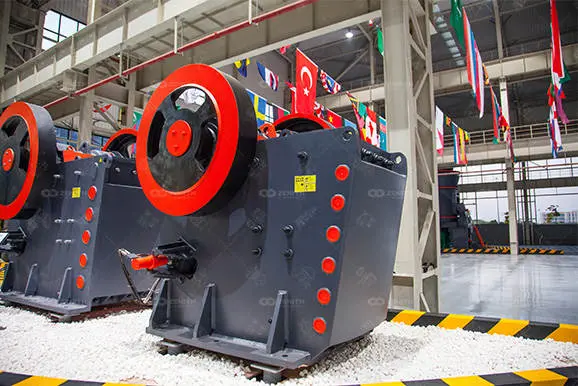
PEW Jaw Crusher

PEW Jaw Crusher

PEW Jaw Crusher is developed based on PE jaw crusher, but it’s easier to operate and it has higher capacity.

Learn More
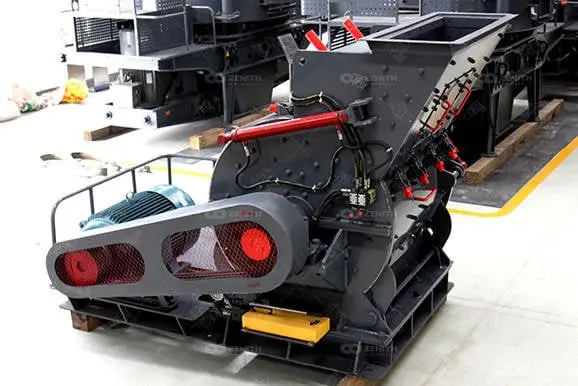
Hammer Mill

Hammer Mill

Hammer Mill is mainly used for coarse powder production and sand production. The end products can be controlled within 0-3mm...

Learn More
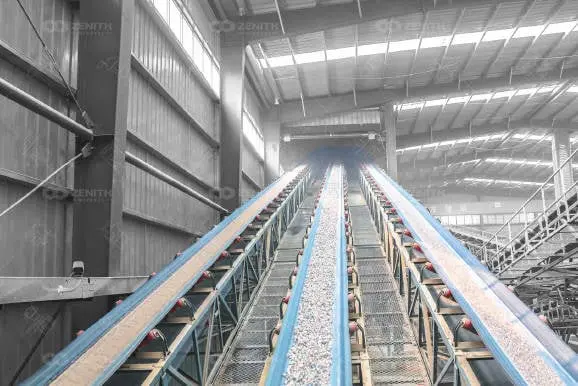
Belt Conveyor

Belt Conveyor

ZENITH’s Belt Conveyor is stable and compact and can be easily installed. It is an ideal upgrading and substitute product...

Learn More
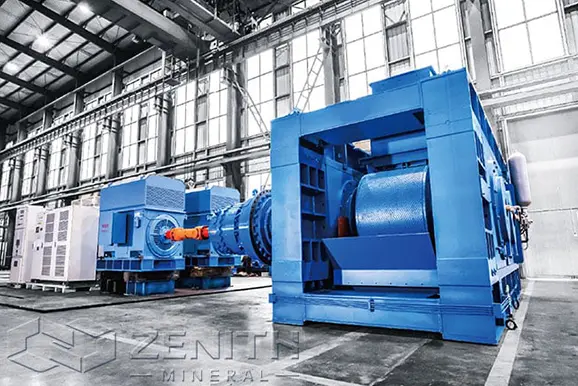
HGM Series High Pressure Grinding Roller

HGM Series High Pressure Grinding Roller

The HPGR significantly enhances the capacity of the crushing system while reducing the consumption of electric power and steel balls...

Learn More
MK Semi-mobile Crusher and Screen

MK Semi-mobile Crusher and Screen

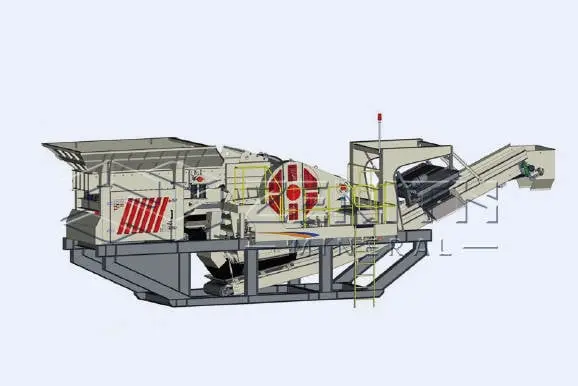
MK Semi-mobile Crusher and Screen (Skid-mounted) is a new integrated mobile crushing and screening plant designed to meet customers' demand...

Learn More
HGT Gyratory Crusher

HGT Gyratory Crusher

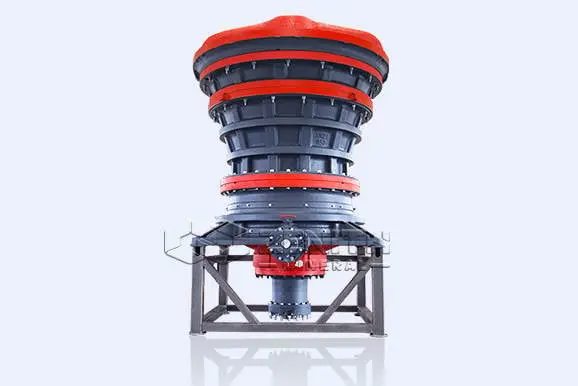
HGT Gyratory Crusher was developed to cater for market demands for large crushing equipment. It’s absolutely an ideal choice for...

Learn More
Raymond Mill

Raymond Mill

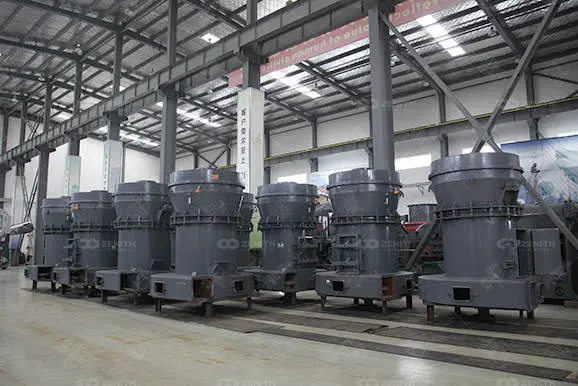
Raymond Mill is beneficial for energy saving and environmental protection. It has high processing capacity, high separation efficiency and low...

Learn More
S Spring Cone Crusher

S Spring Cone Crusher

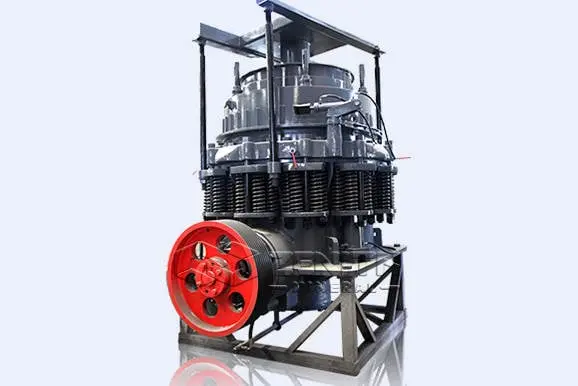
Based on the lamination crushing principle and concept of crushing more and grinding less, S Spring Cone Crusher was released.

Learn More
C6X Jaw Crusher

C6X Jaw Crusher

C6X Jaw Crusher is the latest generation of primary crusher. It adopts lots of advanced technologies and it has much...

Learn More
GF Vibrating Feeder

GF Vibrating Feeder

GF Vibrating Feeder is designed for portable or mobile crushers, semi-fixed crushing lines and small stock ground (capacity below 250t/h,...

Learn More

Solutions

We have more than 5000 cases around the world and provide a full range of solutions.
200-250t/h Soft Rock Crushing Plant

200-250t/h Soft Rock Crushing Plant

200t/h Hard Rock Portable Crushing Plant

200t/h Hard Rock Portable Crushing Plant

150t/h Soft Rock Portable Crushing Plant

150t/h Soft Rock Portable Crushing Plant

MARBLE CRUSHING PLANTS DESIGN

MARBLE CRUSHING PLANTS DESIGN

KAOLIN GRINDING PLANTS DESIGN

KAOLIN GRINDING PLANTS DESIGN

GABBRO CRUSHING PLANTS DESIGN

GABBRO CRUSHING PLANTS DESIGN

100t/h Hard Rock Portable Crushing Plant

100t/h Hard Rock Portable Crushing Plant

LEAD-ZINC ORE CRUSHING PLANTS DESIGN

LEAD-ZINC ORE CRUSHING PLANTS DESIGN

SHANGHAI ZENITH MINERAL CO.,LTD.

Certification

  • CE
  • SGS
  • ISO
  • GOST

Contact information

  • Whatsapp: +8613661969651
  • Email: info@chinagrindingmill.net
  • Website: www.chinagrindingmill.net
  • Address: No. 1688, East Gaoke Road, Shanghai, China

Our Solutions

50-100t/h Soft Rock Crushing Plant
50-100t/h Hard Rock Crushing Plant
100-150t/h Soft Rock Crushing Plant
100-150t/h Hard Rock Crushing Plant
150-200t/h Soft Rock Crushing Plant
150-180t/h Hard Rock Crushing Plant

Cases

Ghana 100-120TPH Granite Portable Crushing Plant
Dubai 550t/h Limestone Crushing Plant
Philippines 80TPH River Pebble Crushing Plant
Turkey Copper Ore Crushing Plant

Resources

Librarys
FAQs
Downloads

About Us

Copyright © 2025 SHANGHAI ZENITH MINERAL CO.,LTD. All Rights Reserved.