What is an impact crusher and what is its working principle
Time:17 September 2025

Impact crushers are widely used in various industries, including mining, construction, and recycling, due to their ability to crush materials efficiently and produce a high-quality end product. This article provides a comprehensive overview of impact crushers, detailing their functionality and working principle.
Introduction to Impact Crushers
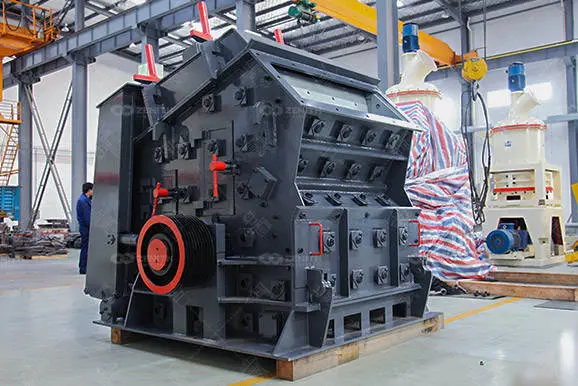
Impact crushers are machines designed to reduce large rocks into smaller pieces by applying force. They are commonly used for secondary or tertiary crushing processes and are known for their ability to produce a uniform particle shape.
Types of Impact Crushers
Impact crushers can be categorized into two main types:
- Horizontal Shaft Impact (HSI) Crushers: These crushers have a horizontal rotor that impacts the material from above.
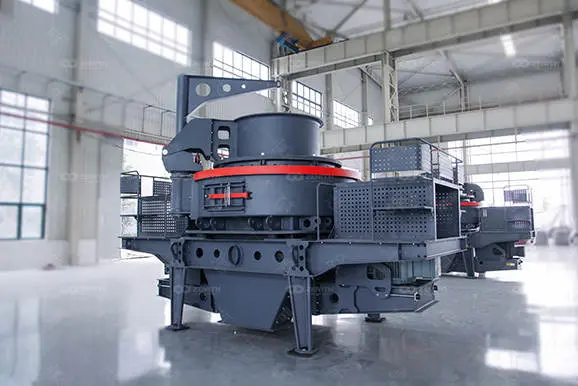
- Vertical Shaft Impact (VSI) Crushers: These crushers use a vertical rotor to impact the material from below.
Components of an Impact Crusher
An impact crusher consists of several key components:
- Rotor: The rotating component that delivers the impact force to the material.
- Blow Bars: Attached to the rotor, these bars strike the material and cause it to break.
- Impact Plates: Positioned around the rotor, they help in redirecting the material back into the path of the blow bars.
- Feed Hopper: Where the material is initially fed into the crusher.
- Discharge Opening: The exit point for crushed material.
Working Principle of Impact Crushers
The working principle of an impact crusher is based on the concept of impact force. Here’s a step-by-step explanation of how it operates:
- Material Feeding: The material is fed into the crusher through the feed hopper.
- Initial Impact: As the rotor spins, the blow bars strike the material, applying a high-speed impact force.
- Secondary Impact: The impacted material is thrown against the impact plates, causing further fragmentation.
- Particle Shaping: The repeated impacts result in the material breaking down into smaller pieces with a uniform shape.
- Discharge: The crushed material exits through the discharge opening, ready for further processing or use.
Advantages of Impact Crushers
Impact crushers offer several benefits:
- High Reduction Ratio: They can reduce materials to smaller sizes efficiently.
- Uniform Particle Shape: The repeated impacts ensure a consistent and desirable particle shape.
- Versatility: Suitable for various materials, including hard and abrasive stones.
- Adjustability: The settings can be adjusted to control the size and shape of the output.
Applications of Impact Crushers
Impact crushers are used in various applications, including:
- Mining: Crushing ores and minerals for further processing.
- Construction: Producing aggregate for road building and infrastructure projects.
- Recycling: Breaking down concrete and asphalt for reuse.
Conclusion
Impact crushers are essential machines in the crushing industry, known for their efficiency and ability to produce high-quality products. Understanding their working principle and components can help in selecting the right crusher for specific applications, ensuring optimal performance and productivity. Whether used in mining, construction, or recycling, impact crushers continue to play a vital role in material processing.