info@chinagrindingmill.net
+8613661969651
english En
ئېنگلىسىز 中文 ئەدەبىيەت ھىندىچە اسبانييە French Arabic Bengali Russian Portuguese Indonesian Urdu German Japanese Swahili Turkish Italian Korean Vietnamese Tamil Punjabi Persian (Farsi) Thai Dutch Polish Ukrainian Romanian Greek Hebrew Swedish Czech Hungarian Danish Finnish Norwegian Malay Tagalog (Filipino) Gujarati Kannada Burmese Amharic Hausa Somali Yoruba Zulu Afrikaans Nepali Sinhala Khmer Lao Mongolian Javanese Telugu Marathi Malayalam Uyghur
SHANGHAI ZENITH MINERAL CO.,LTD. SHANGHAI ZENITH MINERAL CO.,LTD.
  • Home
  • About
  • Products
    Mobile CrusherStone CrusherGrinding MillsModular CrushersMining Equipment
  • Cases
  • Solutions
  • Library
  • Contact
  • Quote Now
  • Home
  • How Are Engineering Principles Applied in Modern Belt Conveyor System Designs

How Are Engineering Principles Applied in Modern Belt Conveyor System Designs

Time:28 October 2025
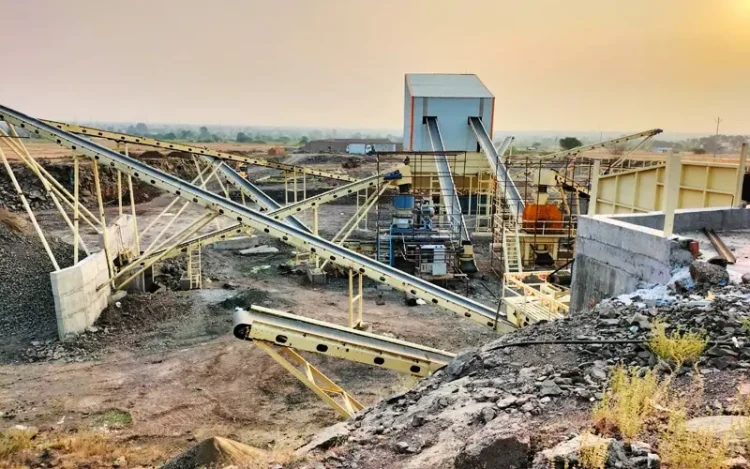
Belt conveyor systems are integral components in various industries, including manufacturing, mining, and logistics. These systems facilitate the efficient movement of materials across distances, contributing to streamlined operations and enhanced productivity. The design of modern belt conveyor systems leverages several engineering principles to ensure optimal performance, safety, and reliability.

Key Engineering Principles in Belt Conveyor Design

1. Mechanical Engineering Principles

Mechanical engineering plays a pivotal role in the design of belt conveyor systems. Key aspects include:

  • Material Selection: Choosing the right materials for the belt, rollers, and frame to ensure durability and resistance to wear and tear.
  • Load Capacity: Calculating the maximum load the conveyor can handle without compromising structural integrity.
  • Tension and Alignment: Ensuring the belt is properly tensioned and aligned to prevent slippage and reduce wear.

2. Electrical Engineering Principles

Electrical engineering principles are crucial for the automation and control of conveyor systems:

  • Motor Selection: Selecting motors that provide adequate power and efficiency for the conveyor’s operational requirements.
  • Control Systems: Implementing programmable logic controllers (PLCs) for precise control over speed, direction, and sequencing.
  • Safety Systems: Integrating sensors and emergency stop mechanisms to enhance operational safety.

3. Industrial Engineering Principles

Industrial engineering focuses on optimizing the conveyor system for maximum efficiency:

  • Workflow Analysis: Designing conveyor layouts that minimize bottlenecks and facilitate smooth material flow.
  • Ergonomics: Ensuring the conveyor system is designed for ease of use and maintenance, reducing operator fatigue.
  • Cost Efficiency: Balancing performance with cost-effective solutions to meet budgetary constraints.

Design Considerations for Modern Belt Conveyor Systems

1. Environmental Impact

Modern designs prioritize sustainability:

  • Energy Efficiency: Utilizing energy-efficient motors and drives to reduce power consumption.
  • Eco-Friendly Materials: Selecting materials that have a lower environmental impact and are recyclable.

2. Safety and Compliance

Ensuring safety and regulatory compliance is paramount:

  • Safety Features: Incorporating guards, emergency stops, and warning systems to protect operators.
  • Regulatory Standards: Adhering to industry standards such as OSHA and ISO to ensure compliance.

3. Technological Advancements

Leveraging technology for enhanced performance:

  • Automation: Implementing automated systems for monitoring and control to reduce human intervention.
  • Data Analytics: Utilizing sensors and IoT devices to gather data for predictive maintenance and performance optimization.

Steps in Designing a Belt Conveyor System

1. Initial Assessment

  • Identify Requirements: Determine the specific needs of the operation, including load capacity, speed, and material type.
  • Site Evaluation: Assess the physical space and environmental conditions where the conveyor will be installed.

2. Conceptual Design

  • Layout Planning: Develop a preliminary layout considering workflow and space constraints.
  • Component Selection: Choose appropriate components such as belts, motors, and frames.

3. Detailed Design and Testing

  • Engineering Calculations: Perform detailed calculations for load, tension, and power requirements.
  • Prototype Testing: Build and test prototypes to validate design assumptions and performance.

4. Implementation and Maintenance

  • Installation: Execute the installation process with precision to ensure system integrity.
  • Regular Maintenance: Establish a maintenance schedule to ensure longevity and reliability.

Conclusion

The application of engineering principles in modern belt conveyor system designs is essential for achieving efficient, reliable, and safe operations. By integrating mechanical, electrical, and industrial engineering concepts, designers can create systems that meet the demanding needs of contemporary industries. Emphasizing sustainability, safety, and technological advancements further enhances the functionality and compliance of these systems, ensuring they remain integral components in the production and logistics sectors.


  • Previous: What Factors Determine Electrostatic Separator Capacity in Mineral Processing Operations
  • Next: What Essential Equipment Configures an Efficient Coal Preparation Plant

Main Products

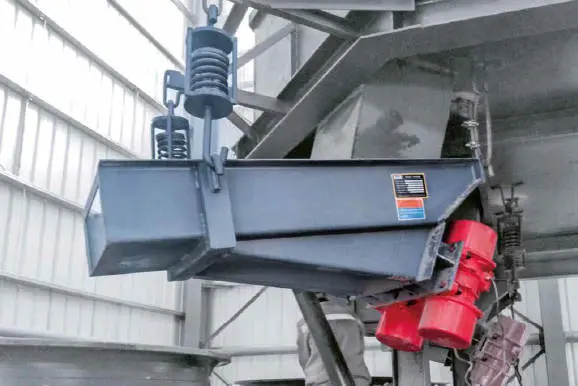
SP Vibrating Feeder

SP Vibrating Feeder

SP Vibrating Feeder can be used to feed small and medium-sized blocks, grain, and powder materials evenly and continuously.

Learn More
MTW Trapezium Grinding Mill

MTW Trapezium Grinding Mill

MTW Euro-type Trapezium Mill owns many independent patents, such as overall prick gear drive, internal thin oil lubrication system, arc-shaped...

Learn More
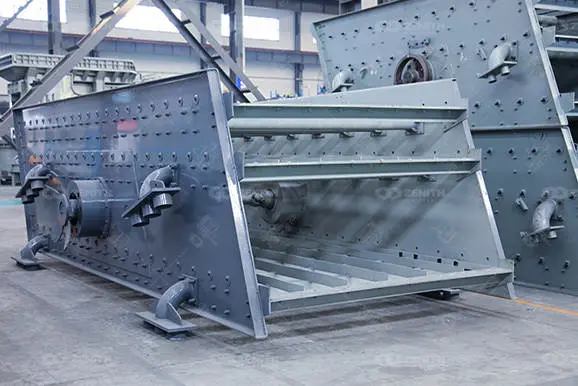
YK Vibrating Screen

YK Vibrating Screen

YK Vibrating Screen appears in such fields as ore beneficiation, aggregates production, solid wastes disposal and coal dressing.

Learn More
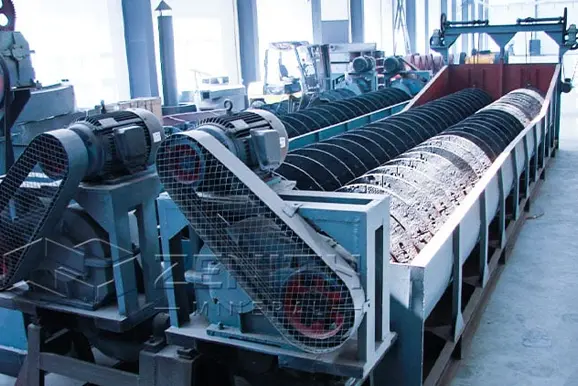
Spiral Classifier

Spiral Classifier

The spiral classifier can be classified into two types based on the number of screw shafts: single screw and double...

Learn More
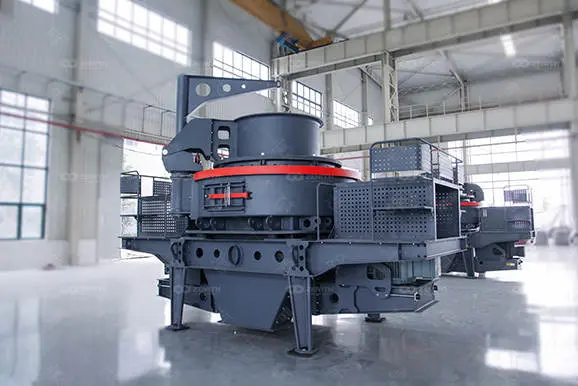
VSI6X Sand Making Machine

VSI6X Sand Making Machine

VSI6X Vertical Shaft Impact Crusher, also known as VSI6X Sand-making Machine, can be used in both sand making and reshaping...

Learn More
Raymond Mill

Raymond Mill

Raymond Mill is beneficial for energy saving and environmental protection. It has high processing capacity, high separation efficiency and low...

Learn More
LD Series Mobile Crusher

LD Series Mobile Crusher

LD Mobile Crusher absorbs advanced crushing technologies. According to different needs, corresponding models can be chosen.

Learn More
PF Impact Crusher

PF Impact Crusher

PF Impact Crusher makes use of impact energy to crush materials. It’s used as a secondary crusher in stone crushing...

Learn More
HGM Series High Pressure Grinding Roller

HGM Series High Pressure Grinding Roller

The HPGR significantly enhances the capacity of the crushing system while reducing the consumption of electric power and steel balls...

Learn More
LUM Ultrafine Vertical Mill

LUM Ultrafine Vertical Mill

LUM Ultrafine Vertical Grinding Mill sets grinding, drying, classifying and transportation as a whole and takes little space.

Learn More

Project Cases

Sold to 180+ countries and regions, successfully helping customers build lots of stone crushing plants.
And the final aggregates are used to build highway, railway, airport and buildings, etc.
100,000TPY Calcite Grinding Plant

100,000TPY Calcite Grinding Plant

300t/h Tunnel Spoil Crushing Plant for Hydropower Station

300t/h Tunnel Spoil Crushing Plant for Hydropower Station

6-20TPH Water Permeable Brick Production Project

6-20TPH Water Permeable Brick Production Project

Mexico 1200-1400TPH Magnetite Crushing Line

Mexico 1200-1400TPH Magnetite Crushing Line

Trinidad and Tobago 400TPH Sand Washing and Screening Plant

Trinidad and Tobago 400TPH Sand Washing and Screening Plant

Dubai 550t/h Limestone Crushing Plant

Dubai 550t/h Limestone Crushing Plant

1000t/h Sand & Gravel Crushing Plant for Hydropower Station

1000t/h Sand & Gravel Crushing Plant for Hydropower Station

India 30TPH Limestone Grinding Plant

India 30TPH Limestone Grinding Plant

SHANGHAI ZENITH MINERAL CO.,LTD.

Certification

  • CE
  • SGS
  • ISO
  • GOST

Contact information

  • Whatsapp: +8613661969651
  • Email: info@chinagrindingmill.net
  • Website: www.chinagrindingmill.net
  • Address: No. 1688, East Gaoke Road, Shanghai, China

Our Solutions

50-100t/h Soft Rock Crushing Plant
50-100t/h Hard Rock Crushing Plant
100-150t/h Soft Rock Crushing Plant
100-150t/h Hard Rock Crushing Plant
150-200t/h Soft Rock Crushing Plant
150-180t/h Hard Rock Crushing Plant

Cases

Ghana 100-120TPH Granite Portable Crushing Plant
Dubai 550t/h Limestone Crushing Plant
Philippines 80TPH River Pebble Crushing Plant
Turkey Copper Ore Crushing Plant

Resources

Librarys
FAQs
Downloads

About Us

Copyright © 2025 SHANGHAI ZENITH MINERAL CO.,LTD. All Rights Reserved.