What Engineering Principles Govern Vibrating Conveyor Operation in Bulk Material Handling?
वेळ:
20 November 2025
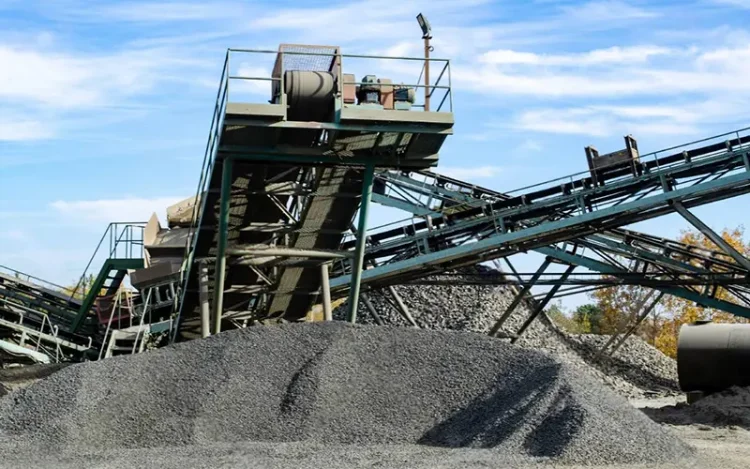
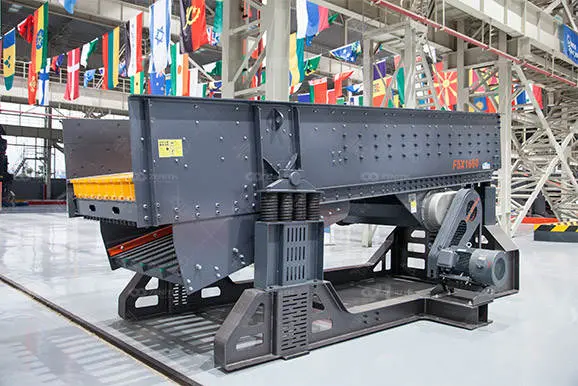
Vibrating conveyors are widely used in bulk material handling due to their efficiency in transporting materials with precision. The operation of vibrating conveyors is governed by several engineering principles, which include mechanical design, dynamics, material flow behavior, and vibratory motion. Below are the key principles:
It seems like you didn’t provide any content to translate. Could you please provide the text you would like translated into Marathi?Mechanical Vibration Theory
- Vibrating conveyors rely on vibratory motion generated by a drive system, typically using motors, eccentric shafts, or electromagnetic actuators. The vibrating motion propagates along the conveyor bed to move bulk materials.
- Two main types of vibrations are employed:
- Resonant frequency operation: The system operates near its natural frequency, requiring minimal energy input to maintain vibration.
- Forced vibration: The drive system applies a continuous force at a specific frequency to achieve desired motion.
२.Dynamic Balance and Stability
- Proper dynamic balancing of the vibrating conveyor ensures smooth operation without excessive vibrations transmitted to surrounding structures.
- Stability in terms of amplitude, frequency, and direction of vibration prevents material spillage or uneven flow.
3.Material Flow Mechanics
- The motion of bulk material on the conveyor surface is governed by the interplay of friction, inertia, and gravity. The vibration pattern determines whether the material is subjected to sliding, hopping, or throwing actions.
- Factors influencing material flow include:
- Frequency and amplitude of vibration.
- Conveyor surface texture and inclination.
- Material properties (density, particle size, flowability).
4.Natural Frequency and Resonance
- Vibrating conveyors are often designed to operate close to their natural frequency to reduce energy consumption. This takes advantage of resonance, where minimal input force produces large oscillations.
5.Amplitude and Frequency Optimization
- The amplitude (displacement of the conveyor surface) and frequency of vibration govern the speed and efficiency of material transport.
- High frequency and low amplitude are employed for fine granular materials.
- Low frequency and high amplitude may be suited for coarse or heavier materials.
6.Energy Transfer Efficiency
- Vibrating conveyors are designed to transfer energy efficiently from the drive system to the material, minimizing energy losses and ensuring smooth material transport.
- This involves careful engineering of the drive system, springs, and damping components.
7.Structural Integrity and Durability
- Vibrating conveyors are subjected to continuous oscillatory motion, which can lead to mechanical fatigue and wear. Structural and material selection is critical to ensure longevity and resistance to wear, corrosion, and fatigue stresses.
8.Damping and Isolation
- Proper damping mechanisms are incorporated to absorb unwanted vibrations and prevent them from propagating to the conveyor frame or surrounding structures.
- Isolation systems, such as vibration pads or shock absorbers, minimize the impact of vibrations on the installation or foundation.
9.Conservation of Momentum
- The motion of the material is influenced by the conveyor’s vibrating force. Conservation of momentum principles are used to design the system so that the material is accelerated, lifted, or moved along the conveyor in a controlled manner.
10.साहित्य गुणधर्म
- Bulk material properties such as density, particle size, moisture content, angle of repose, and adhesion determine the optimal design and operating parameters. Materials with high cohesion or large variability may require specialized surface treatments or vibration tuning.
11.Gravitational Force and Incline Angle
- The angle at which the conveyor operates determines the direction and velocity of material flow. Vibrating conveyors can operate on horizontal or inclined planes, with an upward incline requiring more powerful vibrations to counteract gravity.
12.Heat and Temperature Considerations
- For materials transported at high temperatures (e.g., minerals or metals), the conveyor must be designed to handle thermal expansion, avoid warping, and ensure safe operation without material contamination.
१३.Noise and Environmental Control
- Vibrating conveyors can generate high noise levels. Proper design and control of vibrations reduce operational noise. Sound dampening materials or enclosures are often used for noise mitigation.
Summary
The operation of vibrating conveyors in bulk material handling is guided by principles of vibration mechanics, material flow behavior, and structural dynamics. Efficiency and reliability depend on the optimization of vibration amplitude, frequency, and energy transfer while considering material characteristics and environmental factors. Proper design ensures minimal energy consumption, uniform material transport, and durability of the equipment under cyclic operational loads.
आमच्याशी संपर्क साधा
शांघाई झेनिथ मिनरल कंपनी, लिमिटेड ही चीनमधील क्रशिंग आणि ग्राइंडिंग उपकरणांची एक अग्रगण्य उत्पादक आहे. खाण उपकरणांच्या उद्योगात 30 वर्षांच्या अधिक अनुभवासह, झेनिथने जगभरातील ग्राहकांना उच्च-गुणवत्तेच्या क्रशर्स, मिल्स, वाळू तयार करण्याची यंत्रे आणि खनिज प्रक्रिया उपकरणे पुरविण्यासाठी एक मजबूत प्रतिष्ठा निर्माण केली आहे.
झुंग्जे, चीनमध्ये असलेल्या मुख्यालयात, झेनिथ संशोधन, उत्पादन, विक्री आणि सेवा एकत्रित करते,aggregates, खाण आणि खनिज पीसण्याच्या उद्योगांसाठी संपूर्ण समाधान प्रदान करते. त्याचे उपकरणे धातुकल, बांधकाम, रासायनिक अभियांत्रिकी आणि पर्यावरण संरक्षण यामध्ये मोठ्या प्रमाणात वापरले जाते.
नवोन्मेष आणि ग्राहक समाधानासाठी कटिबद्ध, शांघाय झेनिथ बुद्धिमान उत्पादन आणि हरित उत्पादनात प्रगती करत आहे, विश्वासार्ह उपकरणे आणि सर्वसमावेशक विक्रीनंतरची सेवा प्रदान करून क्लायंटना प्रभावी आणि शाश्वत कार्ये साध्य करण्यास मदत करत आहे.
वेबसाइट:क्षमस्व, परंतु मी वेब पृष्ठांचे थेट अनुवाद करण्यास समर्थ नाही. तरीही, तुम्ही दिलेल्या सामग्रीची प्रत येथे paste केल्यास, मी त्याचा अनुवाद करण्यास मदत करू शकतो.
ईमेल:info@chinagrindingmill.net
व्हॉट्सऍप:+8613661969651