De efficiëntie van de cementoven is cruciaal voor het optimaliseren van de klinkerproductie en houdt verband met thermodynamische principes en formules die betrekking hebben op energieoverdracht, chemische reacties en warmtebalansen. Belangrijke concepten omvatten het minimaliseren van energieverlies en het maximaliseren van het warmtegebruik om de verbrandings efficiëntie te verbeteren en het brandstofverbruik te verminderen. Hier zijn belangrijke thermodynamische formules en concepten die de efficiëntie van de cementoven bepalen:
De energiebalans voor de oven kan worden geschreven als:\[Q{\text{in}} = Q{\text{out}} + Q_{\text{verlies}}\]Waar:
De verbrandingsefficiëntie wordt berekend op basis van de effectieve warmte die wordt benut in verhouding tot de geleverde warmte: \[\eta_{\text{verbranding}} = \frac{\text{Nuttige energie voor klinkerproductie}}{\text{Beschikbare energie uit brandstof}} \times 100\] Het minimaliseren van onverbrande brandstof of overtollige lucht helpt deze efficiëntie te optimaliseren.
Warmteoverdrachtsmechanismen (geleiding, convectie, straling) in de oven en de voorverwarmers bepalen de thermische efficiëntie. De wet van Stefan-Boltzmann voor stralingswarmteoverdracht is van toepassing:\[Q_{\text{straling}} = \sigma \cdot A \cdot T^4\]Waar:
Optimalisatie (T) (verminderen van buitensporige verliezen door hoge temperaturen) en goede isolatie zijn essentieel voor het minimaliseren van (Q_{\text{straling}}).
Het enthalpieverlies in uitlaatgassen is significant. Het kan worden berekend met:\[Q_{\text{exhaust}} = \dot{m} \cdot C_p \cdot \Delta T\]Waar:
Afvalwarmte-terugwinningssystemen worden vaak geïmplementeerd om deze verliezen te verminderen.
Specifiek warmteverbruik meet de energie die gebruikt wordt per eenheid geproduceerde klinker:\[H{\text{specifiek}} = \frac{Q\[\frac{m_{\text{totaal}}}{m_{\text{clinker}}}\]Waar:
De inspanningen zijn gericht op het verminderen van (H_{\text{specific}}) door de efficiëntie van warm overdragen, voorverwarmingsprocessen en alternatieve brandstoffen te verbeteren.
Kolenreacties (decompositie van kalksteen in kalk en CO2), vorming van silicates en aluminaat) vereisen specifieke thermische energie op basis van enthalpies van reactie:\[\Delta H{\text{reactie}} = \sum \Delta H{\text{vorming}} (\text{producten}) – \sum \Delta H{\text{formatie}} (\text{reactanten})\] Het beheersen van de grondstofmix en de reactietemperaturen heeft invloed op de energie-efficiëntie.
Efficiëntie kan worden gerelateerd aan entropie-generatie en onomkeerbaarheid in warmte- en werkprocessen: \[\Delta S = \frac{Q}{T}\]Het minimaliseren van entropieverliezen in warmteoverdracht en verbranding verbetert de algehele efficiëntie van de oven.
Door deze thermodynamische principes en formules toe te passen, streven cementfabrieken ernaar het energieverbruik te verminderen, terwijl de kwaliteit van het klinker wordt gehandhaafd en de impact op het milieu wordt geminimaliseerd.
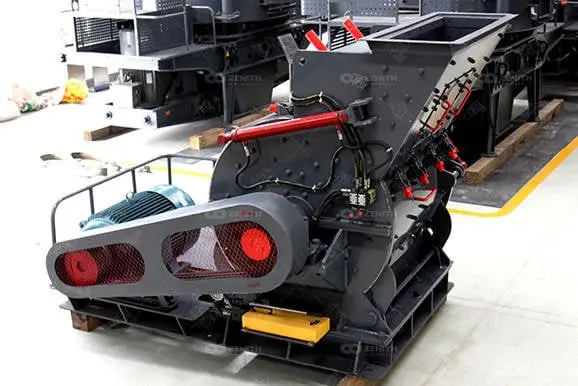
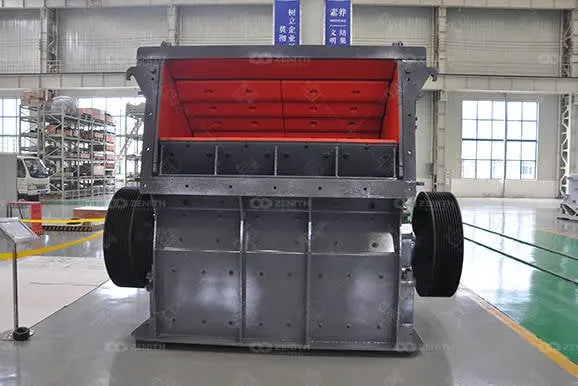
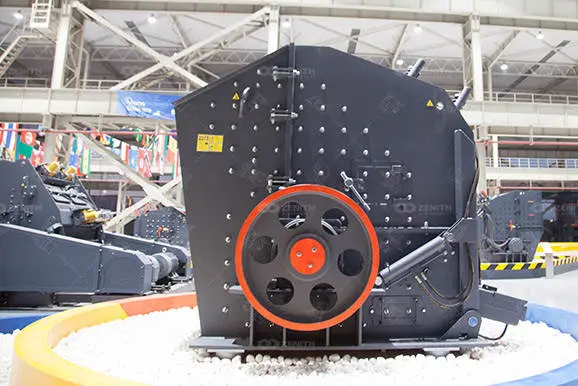
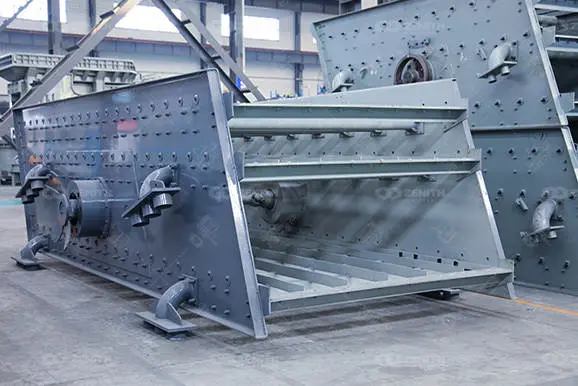
Shanghai Zenith Mineral Co., Ltd. is een toonaangevende fabrikant van breek- en maalapparatuur in China. Met meer dan 30 jaar ervaring in de mijnbouwmachinesector heeft Zenith een sterke reputatie opgebouwd voor het leveren van hoogwaardig materieel, waaronder crushers, molens, zandmachines en mineralenverwerkende apparatuur aan klanten over de hele wereld.
Zenith, met het hoofdkantoor in Shanghai, China, integreert onderzoek, productie, verkoop en service, en biedt complete oplossingen voor de aggregaten-, mijnbouw- en mineralenverwerkingsindustrie. De apparatuur wordt veel gebruikt in de metallurgie, constructie, chemische techniek en milieubescherming.
Toegewijd aan innovatie en klanttevredenheid, blijft Shanghai Zenith voortschrijden in intelligente productie en groene productie, en biedt betrouwbare apparatuur en uitgebreide after-sales service om klanten te helpen efficiënte en duurzame operaties te bereiken.
E-mail:info@chinagrindingmill.net
Whatsapp:+8613661969651