info@chinagrindingmill.net
+8613661969651
english En
Polski 中文版 हिंदी Hiszpański Francuski Arabski Bengalski Rosyjski Portugalski Indonezyjski Urdu Niemiecki Japoński Suahili Turecki Włoski Koreański Wietnamski Tamilski Punjabi Perski (Farsi) Tajski Holenderski Polski Ukraiński Rumuński Grecki Hebrajski Szwedzki Czeski Węgierski Duński Fiński Norweski Malajski Tagalog (Filipiński) Gujarati Kannada Birmański Amharski Hausa Somalijski Joruba Zulu Afrykaners Nepalski Sinhala Khmer Lao Mongolski Jawajski Telugu Marathi Malajalam Ujgur
SHANGHAI ZENITH MINERAL CO.,LTD. SHANGHAI ZENITH MINERAL CO.,LTD.
  • Dom
  • O nas
  • Produkty
    Mobilny KruszarkaKruszarka kamieniMłyny mieląceKruszarki modularneSprzęt górniczy
  • Przypadki
  • Rozwiązania
  • Biblioteka
  • Kontakt
  • CytatTeraz
  • Dom
  • Biblioteka
  • How to Interpret Crusher Plant Flow Diagrams for Optimal Operations?

How to Interpret Crusher Plant Flow Diagrams for Optimal Operations?

Czas: 20 July 2021
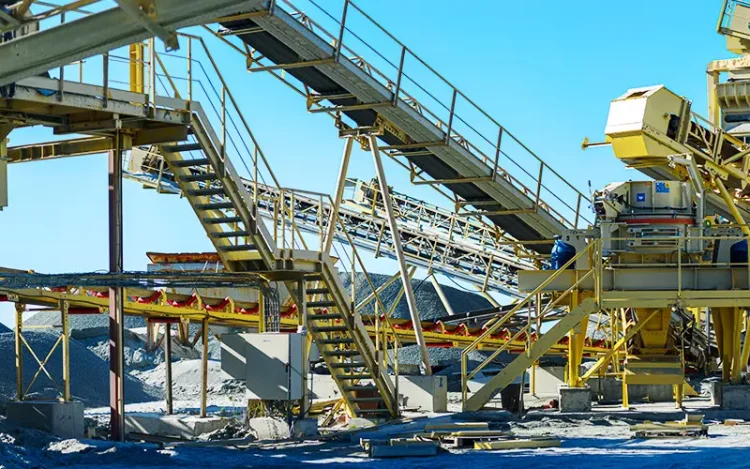
Interpreting crusher plant flow diagrams effectively is crucial for ensuring optimal operations. A flow diagram visually represents the sequence of operations, equipment, and material flows within a crusher plant. By understanding the flow diagram properly, you can identify potential bottlenecks, optimize equipment usage, and ensure smooth operational performance. Here’s a guide to interpret crusher plant flow diagrams:

1. Understand the Overall Layout

  • Locate the start point (raw material feeding) and the end point (finished product output) in the diagram.
  • Observe the connections between equipment, conveyor belts, material stockpiles, and process stages.

2. Identify Key Components

  • Locate the different machines involved:
    • Zasilacze: Represented as structures that deliver raw materials to the next stage.
    • Crushers: Primary (e.g., jaw crusher) and secondary (e.g., cone crusher or impact crusher) processing machines are clearly marked.
    • Ekrany: Used for material separation and classification; may show mesh sizes.
    • Przenośniki: Illustrated as arrows or lines, showing how materials move between equipment.
    • Stockpiles: Represented by piles or designated areas for material storage.
  • Understand the role of each machine in the material flow process.

3. Follow the Material Flow

  • Examine how raw materials progress through the system:
    • From the feeder to the primary crusher.
    • From the crusher to screening equipment.
    • From screens to secondary crushers (if present).
    • Outputs organized into different grades of material (e.g., large aggregate vs. fine sand).
  • Arrows or lines on the diagram represent where material flows next.

4. Identify Inputs and Outputs

  • Pay attention to the material specifications entering the system (e.g., size, type of rock).
  • Check the finished product specifications indicated at output stages (sizes, grades, or quantities).

5. Analyze Performance Metrics

  • Look for annotations or labels on the diagram for:
    • Crusher capacity (tons/hour or tons/day).
    • Screen efficiency and settings (mesh size or cut points).
    • Conveyor belt speeds.
  • Use this information to identify potential areas for optimization.

6. Spot Bottlenecks or Issues

  • Visualize areas where material flow may slow down or where equipment may operate below capacity.
    • E.g., if one crusher processes slower than the rest of the plant.
  • Consider adjustments to balance the flow, such as modifying feed rates, adding bypass lines, or increasing conveyor speed.

7. Safety and Maintenance Considerations

  • Note symbols related to maintenance access points or safety features.
  • Ensure these points are clear so that you can minimize operational disruptions during routine maintenance.

8. Optimize for Desired Output

  • Based on the workflow, identify areas to tweak:
    • Adjust crusher settings for improved product grade.
    • Modify screen configurations for sharper separations.
    • Review conveyor distributions to ensure uniform material movement.

9. Simulate and Test

  • If possible, use flow simulations or monitoring systems built into the diagram (e.g., throughput counters) to test different scenarios.
  • Make adjustments based on real-time data for greater efficiency.

Summary:

By systematically analyzing crusher plant flow diagrams, you can optimize operations effectively. Track material movement, machinery specifications, and performance metrics to identify bottlenecks and areas for improvement. Regular monitoring and adjustments based on the flow diagram can improve efficiency and output quality while minimizing operational costs.

Contact Us

Shanghai Zenith Mineral Co., Ltd. is a leading manufacturer of crushing and grinding equipment in China. With more than 30 years of experience in the mining machinery industry, Zenith has built a strong reputation for delivering high-quality crushers, mills, sand-making machines, and mineral processing equipment to customers around the world.

Headquartered in Shanghai, China, Zenith integrates research, production, sales, and service, providing complete solutions for aggregates, mining, and mineral grinding industries. Its equipment is widely used in metallurgy, construction, chemical engineering, and environmental protection.

Committed to innovation and customer satisfaction, Shanghai Zenith continues to advance in intelligent manufacturing and green production, offering reliable equipment and comprehensive after-sales service to help clients achieve efficient and sustainable operations.

website: https://www.chinagrindingmill.net

E-mail:info@chinagrindingmill.net

WhatsApp+8613661969651

  • Poprzedni: Where to Rent 200TPH Mobile Crushers for Indian Mining Projects?
  • Następnie: Can 5-Gallon Bucket Rock Crushers Optimize Gold Mining Operations?

Główne produkty

MRN Pendulum Roller Grinding Mill

Młyn walcowy z wahadłem MRN

MRN Pendulum Roller Grinding Mill reprezentuje zaawansowaną technologię przetwarzania mielenia obecnie.

Dowiedz się więcej
PFW Impact Crusher

Kruszarka udarowa PFW

PFW Kruszarka udarowa jest zwykle używana razem z kruszarkami szczękowymi. W zakładzie kruszenia kamieni często pojawia się w...

Dowiedz się więcej
C6X Jaw Crusher

Zgniatarka szczękowa C6X

C6X Kruszarka szczękowa to najnowsza generacja kruszarek wtórnych. Wykorzystuje wiele zaawansowanych technologii i ma znacznie...

Dowiedz się więcej
Spiral Classifier

Klasyfikator spiralny

Klasyfikator spiralny można podzielić na dwa rodzaje w zależności od liczby wałów śrubowych: pojedyncza śruba i podwójna...

Dowiedz się więcej
PE Jaw Crusher

Wysokowydajny morski kruszarz PE

Kruszarka PE Jaw to klasyczna kruszarka o długiej historii. Zazwyczaj jest używana jako kruszarka podstawowa w zakładach kruszenia.

Dowiedz się więcej
B Series VSI Impact Crusher

Kruszarka udarowa serii B VSI

Klejarka uderzeniowa B Series VSI, powszechnie znana jako maszyna do produkcji piasku, stanowi podstawę dla rozwoju B Deep-rotor...

Dowiedz się więcej
HGT Gyratory Crusher

HGT Kruszarka stożkowa

Kruszarka stożkowa HGT została opracowana w odpowiedzi na potrzeby rynku dotyczące dużego sprzętu kruszącego. To zdecydowanie idealny wybór dla...

Dowiedz się więcej
NK Portable Crusher Plant

Przenośna Wytwórnia Kruszywa NK

Przenośna maszyna krusząca NK, znana również jako przenośna kruszarka na kołach NK, to opłacalny wybór dla kamienia i rudy metalowej...

Dowiedz się więcej
F5X Vibrating Feeder

Zasilacz wibracyjny F5X

F5X Podajnik wibracyjny został zaprojektowany do pracy w superciężkich warunkach operacyjnych z silną intensywnością wibracji wynoszącą 4,5G i wyjątkową solidnością...

Dowiedz się więcej
MK Semi-mobile Crusher and Screen

MK Półmobilny Kruszarka i Sito

MK Półmobilny Kruszarka i Sito (Zamontowane na podwoziu) to nowa zintegrowana mobilna instalacja do kruszenia i przesiewania, zaprojektowana w celu zaspokojenia potrzeb klientów...

Dowiedz się więcej

Przypadki projektów

Sprzedane do 180+ krajów i regionów, skutecznie pomagając klientom w budowie wielu zakładów kruszenia kamieni.
A ostateczne kruszywa są wykorzystywane do budowy autostrad, kolei, lotnisk i budynków itp.
30,000TPY Cement Grinding Plant

30 000 ton rocznie zakład mielenia cementu

200t/h Granite Crushing Plant for Hydropower Station

200t/h Zakład Kruszenia Granitu dla Elektrowni Wodnej

Mexico 1200-1400TPH Magnetite Crushing Line

Meksyk 1200-1400TPH Linia Kruszenia Magnetytu

India 30TPH Limestone Grinding Plant

Indie 30TPH Zakład Mielenia Wapienia

The Philippines 80TPH River Pebble Crushing Plant

Filipiny 80TPH Zakład Kruszenia Kamieni Rzeki

Trinidad and Tobago 400TPH Sand Washing and Screening Plant

Trinidad i Tobago 400TPH Zakład do mycia i przesiewania piasku

Dubai 550t/h Limestone Crushing Plant

Dubaj 550 t/h Zakład Kruszenia Wapienia

South Africa Manganese Ore Crushing Plant

Kopalnia rudy manganowej w Południowej Afryce

SHANGHAI ZENITH MINERAL CO.,LTD.

Certyfikacja

  • CE
  • SGS
  • ISO
  • GOST

Informacje kontaktowe

  • WhatsApp+8613661969651
  • E-mail:info@chinagrindingmill.net
  • Strona internetowawww.chinagrindingmill.net
  • Adres:Nr 1688, Wschodnia Ulica Gaoke, Szanghaj, Chiny

Nasze rozwiązania

50-100t/h Zakład Kruszenia Miękkich Skał
Zakład kruszenia twardych skał 50-100 t/h
100-150t/h Zakład Kruszenia Miękkich Skał
100-150t/h Zakład Kruszenia Twardych Skał
150-200t/h Zakład Kruszenia Miękkiej Skały
150-180t/h Zakład Kruszenia Twardych Skał

Przypadki

Ghana 100-120TPH Przenośna Linia do Kruszenia Granitu
Dubaj 550 t/h Zakład Kruszenia Wapienia
Filipiny 80TPH Zakład Kruszenia Kamieni Wodnych
Zakład Wydobycia Rudy Miedzi w Turcji

Zasoby

Biblioteki
FAQ
Pobierania

O nas

Copyright © 2025 SHANGHAI ZENITH MINERAL CO.,LTD. Wszelkie prawa zastrzeżone.