info@chinagrindingmill.net
+8613661969651
english En
അംഗേ@PostMapping('/translate')-to_unicode_content-': 'English' ചൈനീസ് പതിപ്പ് ഹിന്ദി സ്പാനിഷ് French Arabic Bengali Russian Portuguese Indonesian Urdu German Japanese Swahili Turkish Italian Korean Vietnamese Tamil Punjabi Persian (Farsi) Thai Dutch Polish Ukrainian Romanian Greek Hebrew Swedish Czech Hungarian Danish Finnish Norwegian Malay Tagalog (Filipino) Gujarati Kannada Burmese Amharic Hausa Somali Yoruba Zulu Afrikaans Nepali Sinhala Khmer Lao Mongolian Javanese Telugu Marathi Malayalam Uyghur
SHANGHAI ZENITH MINERAL CO.,LTD. SHANGHAI ZENITH MINERAL CO.,LTD.
  • Home
  • About
  • Products
    Mobile CrusherStone CrusherGrinding MillsModular CrushersMining Equipment
  • Cases
  • Solutions
  • Library
  • Contact
  • Quote Now
  • Home
  • Library
  • How to Estimate Particulate Emissions from Modern Rock Crushing Facilities?

How to Estimate Particulate Emissions from Modern Rock Crushing Facilities?

Time: 1 January 2021

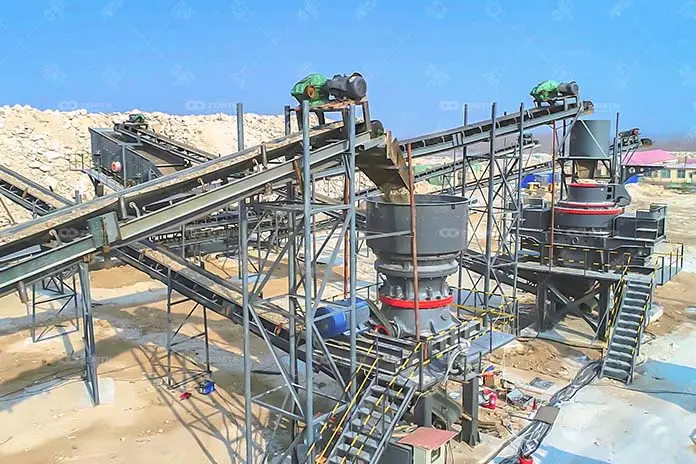
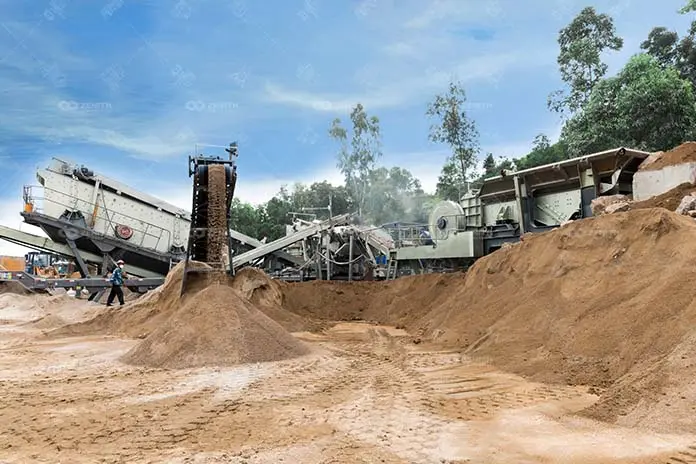
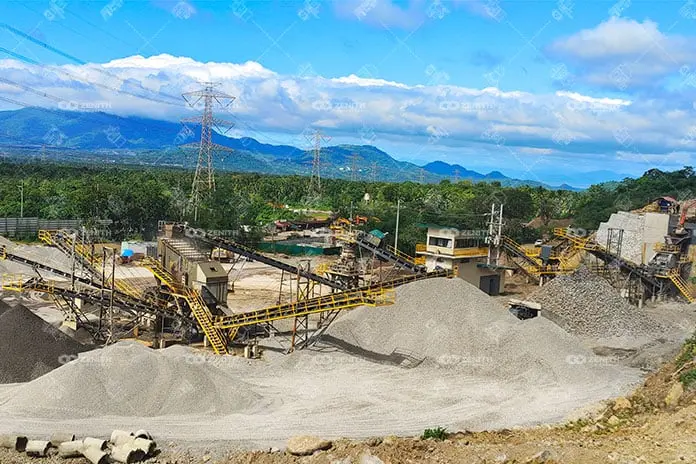
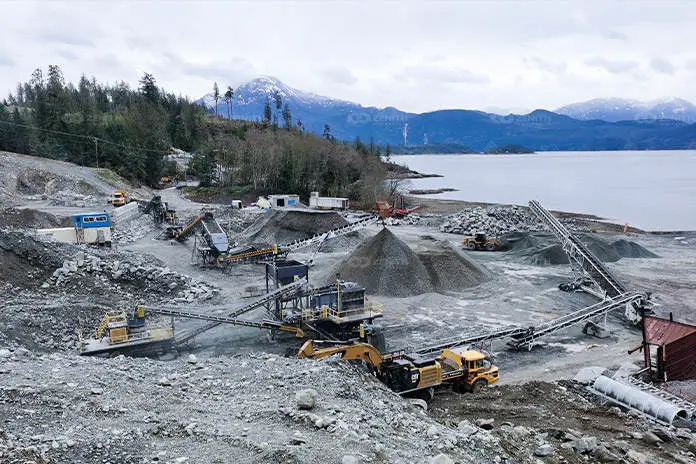
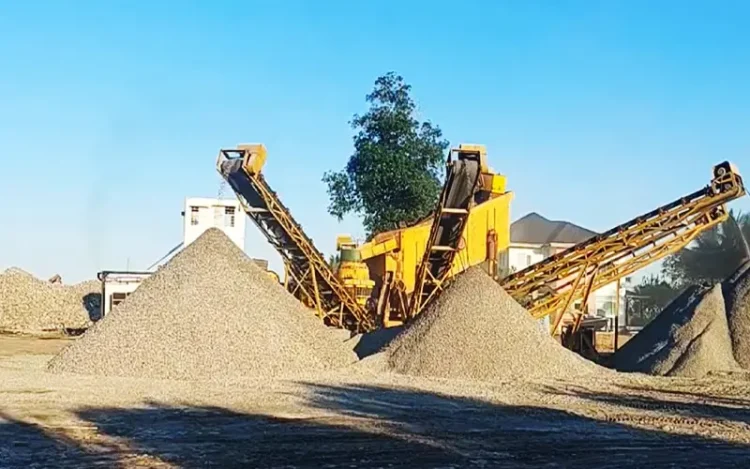
Estimating particulate emissions from modern rock-crushing facilities involves assessing emissions from various processes such as crushing, screening, conveying, stockpiling, and operating haul roads. These facilities generate both fugitive dust (e.g., particles released during material handling) and exhaust emissions from equipment. Here’s a general process for estimating particulate emissions:

1. Understand Emission Points

Identify all emission sources at the facility, which typically include:

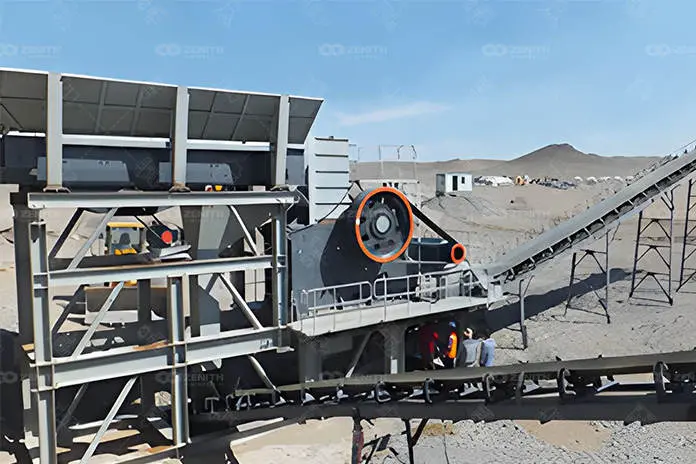
  • Primary, secondary, and tertiary crushers.
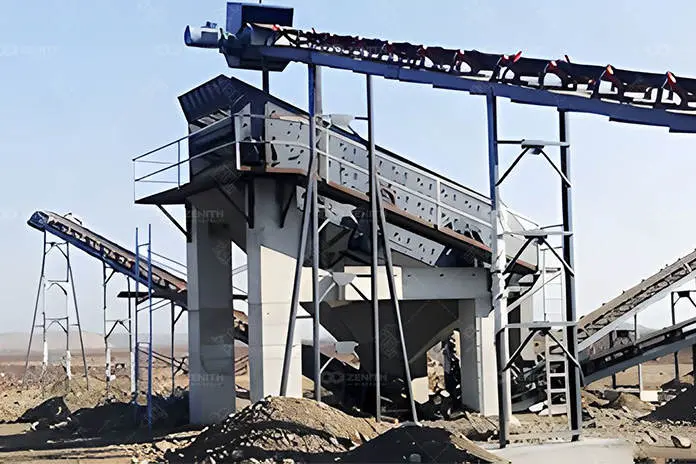
  • Screens and conveyors.
  • Drop points for material transfer.
  • Stockpiles (wind erosion and material movement).
  • Truck and vehicle traffic on unpaved or paved haul roads.

2. Determine Applicable Emission Factors

Refer to established emission factors provided in:

  • EPA AP-42 document, particularly Chapter 11.19.2: "Crushed Stone Processing and Pulverized Mineral Processing."
    • For specific operations, AP-42 provides emission factors for PM (particulate matter), PM10 (particles ≤10 micrometers), and PM2.5 (particles ≤2.5 micrometers) depending on the moisture content, equipment type, and process conditions.
  • Vendor-specific data or equipment specifications, if available.

Example emission factors for non-metallic mineral processing (AP-42):

  • Crushing: 0.005 lb/ton for PM10.
  • Screening: 0.0022 lb/ton for PM10.
  • Conveyor transfer points: 0.00014 lb/ton for PM10.

These factors may vary based on particle size distribution, moisture level, and control equipment.

3. Calculate Material Flow Rates

Determine the throughput or production rate in tons per hour (tph) for each emission source. Use process flow diagrams or equipment specifications.

4. Assess Control Efficiency

If emission control systems (e.g., water spray systems, dry fog systems, or baghouse filters) are installed:

  • Factor in the control efficiency, commonly ranging from 70%–99% depending on the technology.
  • Adjust emission rates based on the effectiveness of suppression systems.

5. Estimate Fugitive Emissions

For uncontrolled fugitive dust emissions, estimate emissions using models or empirical relationships. Emission factors for haul road dust (for trucks or vehicles) are provided in AP-42 Chapter 13.2.2, considering variables such as:

  • Surface material (e.g., paved vs. unpaved roads).
  • Average vehicle speed.
  • Silt content and moisture levels.

Example formula from AP-42 for unpaved roads:\[ E = k \cdot \frac{{s}}{12} \cdot \frac{{W}}{3}^{a} \cdot \frac{{365 – P}}{365} \]

Where:

  • ( E ): Emission factor (lb/VMT).
  • ( k, a, b ): Empirical constants for specific road conditions.
  • ( s ): Surface material silt content (%).
  • ( W ): Vehicle weight (tons).
  • ( P ): Number of wet days per year.

6. Monitor and Adjust Based on Site Conditions

If empirical methods are insufficient, conduct direct air monitoring or testing to refine estimates. In many jurisdictions, rock crushers must comply with local air quality permits requiring regular emissions monitoring.

7. Factor In Regulatory Requirements

Consult any site-specific permits or regulatory requirements for additional methodologies or limits. Often facilities must demonstrate compliance via stack testing or visible emission limits (Opacity standards).

8. Use a Spreadsheet or Emission Calculation Tool

Develop a spreadsheet to aggregate all sources of emissions. Multiply production rate by emission factors and adjust for control efficiencies:

  • ( E = \text{Throughput} \times \text{Emission Factor} \times (1 – \text{Control Efficiency}) )

Several environmental agencies and consultants also offer software tools or calculators designed to help estimate emissions for quarrying and crushing facilities.

Example Resources:

  • EPA AP-42 Database – Comprehensive source for emission factors.
  • National Pollutant Inventory (NPI) guides.
  • State and local air quality agency tools or reporting guidelines.

Integrating control measures and accurate production data will ensure realistic estimates of particulate emissions.

Contact Us

Shanghai Zenith Mineral Co., Ltd. is a leading manufacturer of crushing and grinding equipment in China. With more than 30 years of experience in the mining machinery industry, Zenith has built a strong reputation for delivering high-quality crushers, mills, sand-making machines, and mineral processing equipment to customers around the world.

Headquartered in Shanghai, China, Zenith integrates research, production, sales, and service, providing complete solutions for aggregates, mining, and mineral grinding industries. Its equipment is widely used in metallurgy, construction, chemical engineering, and environmental protection.

Committed to innovation and customer satisfaction, Shanghai Zenith continues to advance in intelligent manufacturing and green production, offering reliable equipment and comprehensive after-sales service to help clients achieve efficient and sustainable operations.

website: https://www.chinagrindingmill.net

Email:info@chinagrindingmill.net

Whatsapp:+8613661969651

  • Next: What Equipment Configurations Optimize Soil Sample Preparation for Geotechnical Analysis?

Main Products

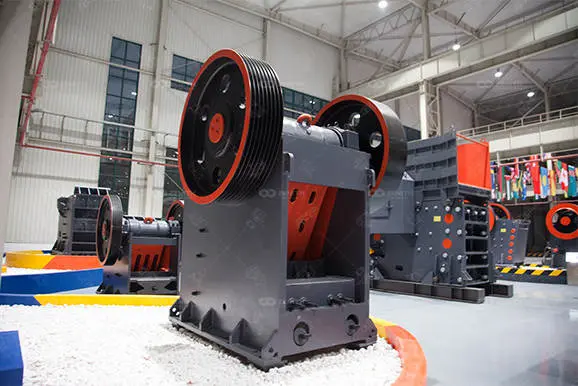
PE Jaw Crusher

PE Jaw Crusher

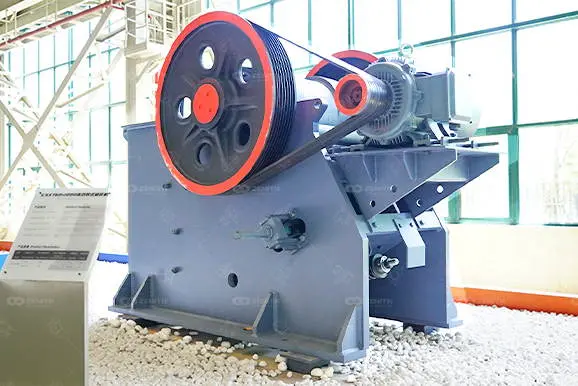
PE Jaw Crusher is one classic crusher with long history. It is usually used as primary crusher in crushing plants.

Learn More
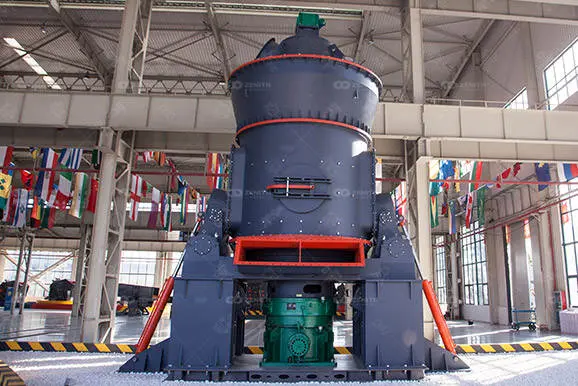
LM Vertical Grinding Mill

LM Vertical Grinding Mill

LM Vertical Grinding Mill integrates five functions of crushing, grinding, powder selection, drying and material conveying.

Learn More
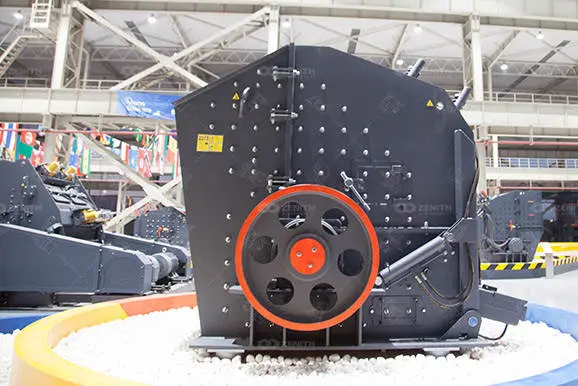
PFW Impact Crusher

PFW Impact Crusher

PFW Impact Crusher is usually used with jaw crushers together. In a stone crushing plant, it often appears in the...

Learn More
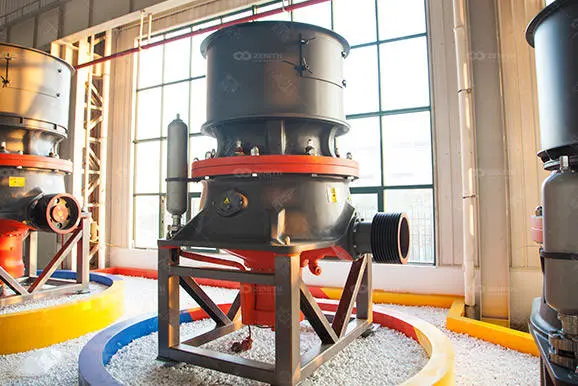
HST Hydraulic Cone Crusher

HST Hydraulic Cone Crusher

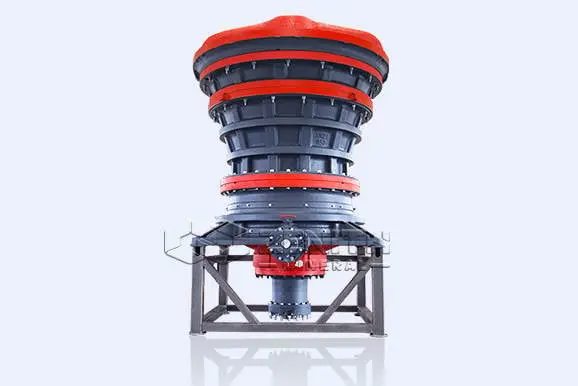
HST Single-cylinder Hydraulic Cone Crusher is one kind of professional hard rock crushers, which is often used as a secondary...

Learn More
HGT Gyratory Crusher

HGT Gyratory Crusher

HGT Gyratory Crusher was developed to cater for market demands for large crushing equipment. It’s absolutely an ideal choice for...

Learn More
C5X Jaw Crusher

C5X Jaw Crusher

The C5X Jaw Crusher features a well-designed crushing chamber and outstanding motion characteristics, boasting a larger stroke and higher speed...

Learn More
B Series VSI Impact Crusher

B Series VSI Impact Crusher

B Series VSI Impact Crusher is, commonly known as sand making machine, the basis for the development of B Deep-rotor...

Learn More
MRN Pendulum Roller Grinding Mill

MRN Pendulum Roller Grinding Mill

MRN Pendulum Roller Grinding Mill represents the advanced grinding processing technology at present.

Learn More
Spiral Classifier

Spiral Classifier

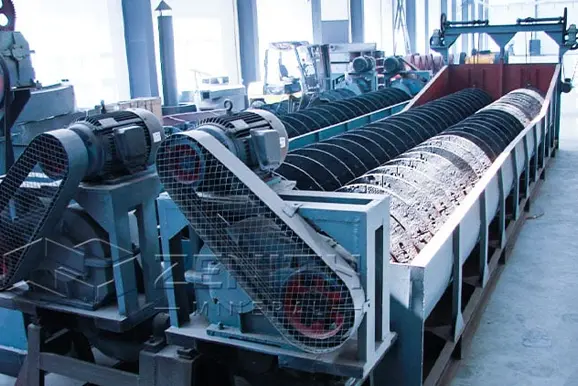
The spiral classifier can be classified into two types based on the number of screw shafts: single screw and double...

Learn More
HPT Hydraulic Cone Crusher

HPT Hydraulic Cone Crusher

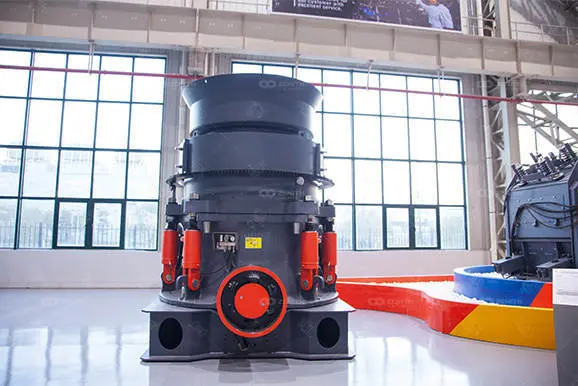
HPT Multi-cylinder Hydraulic Cone Crusher often appears in the secondary crushing stage. The use of hydraulic devices makes maintenance easier.

Learn More

Project Cases

Sold to 180+ countries and regions, successfully helping customers build lots of stone crushing plants.
And the final aggregates are used to build highway, railway, airport and buildings, etc.
West Africa 2000TPD Gold Cyanidation Plant

West Africa 2000TPD Gold Cyanidation Plant

Ghana 100-120TPH Granite Portable Crushing Plant

Ghana 100-120TPH Granite Portable Crushing Plant

The Philippines 200TPH Granite Crushing Plant

The Philippines 200TPH Granite Crushing Plant

India 30TPH Limestone Grinding Plant

India 30TPH Limestone Grinding Plant

Canada 550t/h Granite Crushing Plant

Canada 550t/h Granite Crushing Plant

Turkey Copper Ore Crushing Plant

Turkey Copper Ore Crushing Plant

100,000TPY Calcite Grinding Plant

100,000TPY Calcite Grinding Plant

South Africa Manganese Ore Crushing Plant

South Africa Manganese Ore Crushing Plant

SHANGHAI ZENITH MINERAL CO.,LTD.

Certification

  • CE
  • SGS
  • ISO
  • GOST

Contact information

  • Whatsapp: +8613661969651
  • Email: info@chinagrindingmill.net
  • Website: www.chinagrindingmill.net
  • Address: No. 1688, East Gaoke Road, Shanghai, China

Our Solutions

50-100t/h Soft Rock Crushing Plant
50-100t/h Hard Rock Crushing Plant
100-150t/h Soft Rock Crushing Plant
100-150t/h Hard Rock Crushing Plant
150-200t/h Soft Rock Crushing Plant
150-180t/h Hard Rock Crushing Plant

Cases

Ghana 100-120TPH Granite Portable Crushing Plant
Dubai 550t/h Limestone Crushing Plant
Philippines 80TPH River Pebble Crushing Plant
Turkey Copper Ore Crushing Plant

Resources

Librarys
FAQs
Downloads

About Us

Copyright © 2025 SHANGHAI ZENITH MINERAL CO.,LTD. All Rights Reserved.