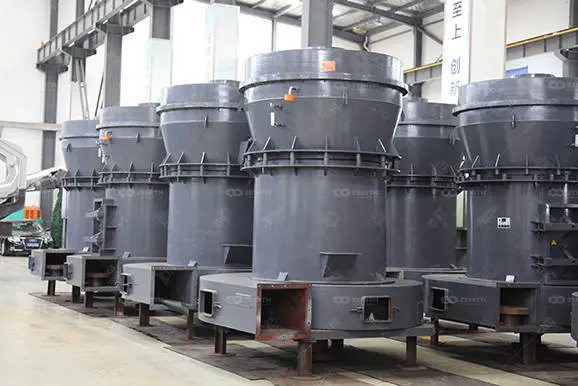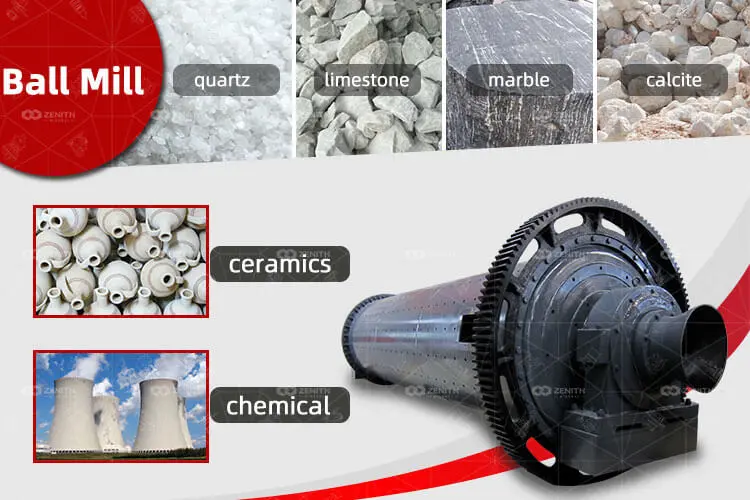
Ball mills are widely used in the mining and cement industries to grind materials into fine powders. The grinding fineness of a ball mill is crucial as it directly influences the efficiency of the subsequent processes. Understanding the factors that affect grinding fineness can help in optimizing the milling process for better performance and energy efficiency.
Several factors can affect the grinding fineness of a ball mill. These factors can be broadly categorized into two groups: operational parameters and material characteristics.
– The speed at which the ball mill operates significantly affects the grinding process.
– Critical speed is the speed at which the centrifugal force equals the gravitational force on the mill’s inner surface. Operating at or near this speed can enhance grinding efficiency.
– Optimal speed is typically between 65% to 75% of the critical speed.
– The size and distribution of the grinding media (balls) affect the grinding efficiency and fineness.
– Larger balls are more effective for breaking larger particles, while smaller balls are more efficient for fine grinding.
– A balanced mix of different ball sizes can optimize the grinding process.
– The volume of material and grinding media within the mill affects the grinding efficiency.
– Overloading the mill can lead to reduced grinding efficiency and increased wear on the mill components.
– Underloading can result in inefficient grinding and increased energy consumption.
– The duration for which the material is subjected to grinding influences the fineness.
– Longer grinding times generally result in finer particles, but excessive grinding can lead to over-grinding, consuming more energy and reducing mill efficiency.
– The design of the mill, including the liner configuration and the type of discharge (overflow or grate), can impact the grinding process.
– Properly designed liners can enhance the lifting and cascading action of the balls, improving grinding efficiency.
– Harder materials require more energy to grind and may result in coarser particles.
– The Mohs scale of hardness can be used to determine the grinding difficulty of different materials.
– High moisture content can lead to agglomeration of particles, reducing grinding efficiency and resulting in coarser outputs.
– Drying the material before grinding can help achieve finer particles.
– The size of the material fed into the mill affects the grinding efficiency.
– Smaller feed sizes generally lead to finer grinding, as the material is easier to break down.
– The chemical composition of the material can affect its grindability.
– Materials with uniform composition are typically easier to grind to a fine consistency.
To achieve optimal grinding fineness, consider the following strategies:
By understanding and controlling these factors, operators can enhance the performance of ball mills, achieving the desired grinding fineness while optimizing energy consumption and reducing operational costs.