The shape of aggregate plays a crucial role in various construction applications, especially in concrete and asphalt mixtures. Well – shaped aggregates can enhance the mechanical properties, workability, and durability of these materials. Aggregates with a more cubical or rounded shape, as opposed to elongated or flaky ones, are generally preferred. Elongated and flaky aggregates can lead to reduced strength, poor workability, and increased porosity in the final product. Therefore, improving the shape of aggregate is a key concern in the aggregate production industry.

To achieve optimal aggregate shape, a systematic approach integrating technical expertise and process optimization is essential. This approach primarily involves the following key elements:
The geological properties of raw materials are the cornerstone in determining the final shape of aggregates. Igneous rocks, such as basalt and granite, are highly favored due to their inherent hardness and structural integrity. Their dense mineral composition and crystalline structure enable them to break into relatively cubical particles during the crushing process. This uniform fragmentation results from the consistent distribution of internal stresses within these rocks, facilitating the production of aggregates with well – balanced dimensions.
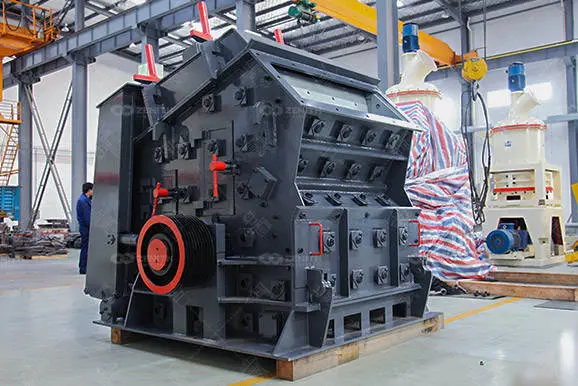
In contrast, sedimentary rocks like limestone present distinct challenges. Composed of layered sediments that have been compacted over time, limestone is more prone to fracturing into flat or elongated pieces when subjected to conventional compression – type crushers. The layered structure of limestone causes it to break along weak planes, leading to non – ideal particle shapes. However, when processed with horizontal or vertical impact crushers, and provided that the limestone has low abrasiveness, these crushers can leverage impact forces to shatter the material more randomly, thereby producing better – shaped particles.
Rocks with high clay or impurity content pose significant risks to aggregate quality. These impurities disrupt the uniform breakage of the rock matrix, causing particles to fracture irregularly and form elongated or flaky shapes. Clay, for instance, can act as a lubricant during crushing, altering the stress distribution and leading to unpredictable particle morphology. Therefore, prior to production, it is essential to conduct thorough geological assessments and material testing to ensure that the selected raw materials are conducive to producing well – shaped aggregates.
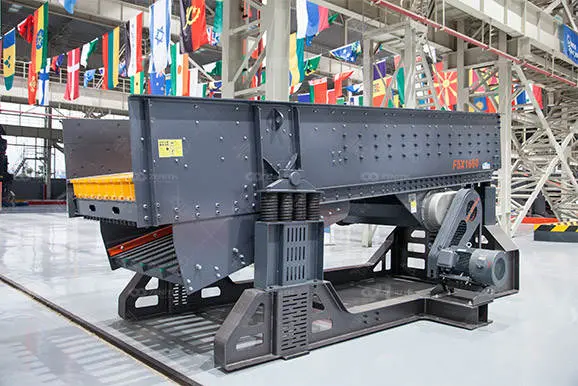
Jaw crushers are among the most commonly used primary crushing equipment in the aggregate production industry. They operate on the principle of compression, where a movable jaw moves towards a fixed jaw, crushing the material between them. This simple yet effective design makes jaw crushers suitable for a wide range of raw materials, from soft to medium – hard rocks.
One of the key advantages of jaw crushers is their high crushing ratio in the primary crushing stage. They can efficiently reduce large – sized rocks into smaller pieces, which can then be further processed in subsequent crushing stages. This high – ratio crushing helps in breaking down the raw materials into a more manageable size for achieving better – shaped aggregates in later processing.
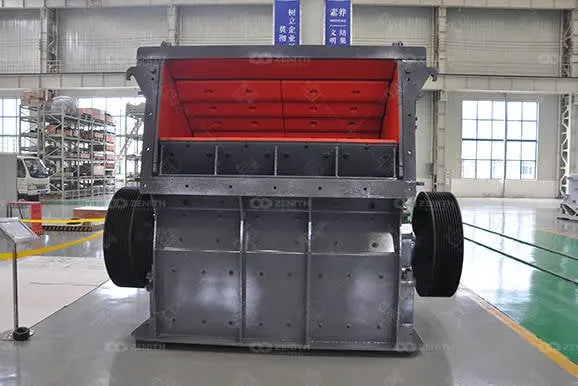
However, when it comes to directly improving the shape of aggregates, jaw crushers have some limitations. The compression – based crushing action may not always produce the most cubical or rounded particles. Instead, the particles may have irregular shapes with sharp edges. Nevertheless, jaw crushers play a vital role in the initial breakdown of materials, laying the foundation for further shape improvement in subsequent crushing processes.
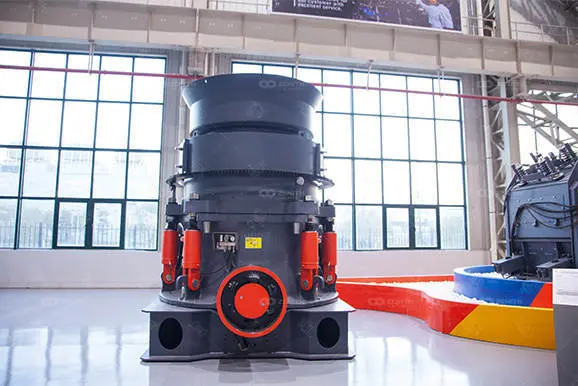
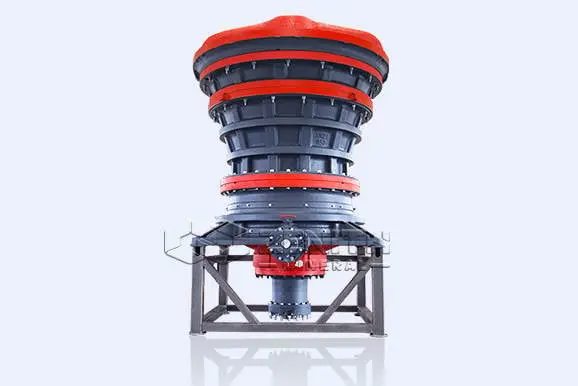
Cone crushers are highly regarded for their ability to produce aggregates with excellent particle shape, especially in the secondary and tertiary crushing stages. They work by compressing the material between a mantle, which rotates eccentrically, and a concave bowl. The unique design features of cone crushers contribute significantly to their effectiveness in shaping aggregates.
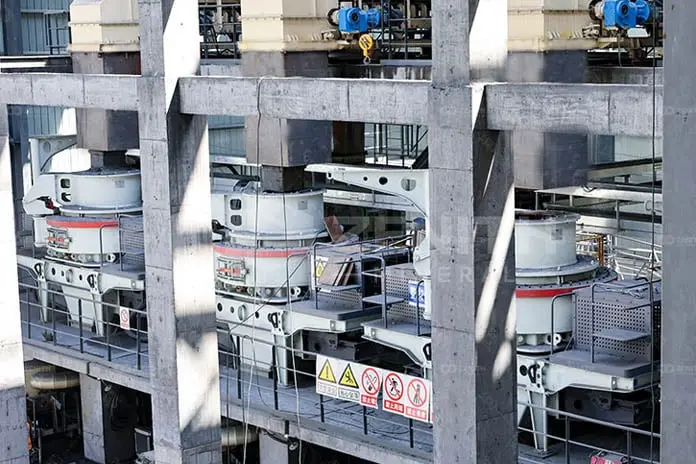
When extra shaping is required, especially for more challenging materials, a vertical shaft impactor (VSI) can be added to the production line as a supplemental machine to cone crushers. The VSI is highly effective in generating excellent particle shape and is the ideal tool for creating manufactured sand. However, it has some trade – offs.
Advances in VSI technology, such as fully or semi – autogenous breakage systems and improvements in rotor design and metallurgy for steel – on – steel systems, have helped to mitigate some of these issues. For example, when the VSI transitions from a rock – on – rock fully autogenous system to a full steel – on – steel rotor and anvil system, energy efficiency often improves.
From a flow – sheet design perspective, to generate cubical product, it is advisable to operate with the lowest possible reduction ratio. A high reduction ratio, particularly in the final stage of crushing, often leads to poor or reduced cubicity. A “best practice” strategy is to accept a higher reduction ratio in secondary crushing so that it can be lowered in tertiary crushing. This approach allows for more controlled particle shaping in the later stages of the process.
Operating both the secondary crusher and the tertiary crusher in closed – circuit with a wider closed – side setting and an increased re – circulation load from the sizing screens can also improve particle shape. In a closed – circuit system, the over – sized particles are returned to the crusher for further processing. This repeated processing helps to break down the particles into more uniform shapes. Such as ZENITH cone crushers, with their high pivot and high throw, can produce a very cubical product in closed – circuit. Operating these crushers at their lowest acceptable eccentric speed can further maximize the yield.
After the crushing process, screening can be used to separate the aggregates based on their shape. Specialized screening equipment can be employed to remove elongated and flaky particles. For example, a screening device with specific aperture shapes and orientations can be designed to allow only cubical or near – cubical particles to pass through, while rejecting the undesirable shapes. This can significantly improve the overall shape quality of the aggregate product.
Digital image analysis is a powerful tool for quality control in aggregate production. By using cameras and image – processing software, the shape characteristics of the aggregates can be quantified. Parameters such as aspect ratio, shape factor, structure factor, sphericity, roundness, and angularity can be measured. This information can be used to adjust the crushing process in real – time. For example, if the analysis shows an excessive number of elongated particles, the operating parameters of the crushers can be modified to correct the issue.
Regular sampling and testing of the aggregate product are essential. Physical tests, such as the flakiness and elongation index tests, can be carried out to measure the proportion of non – desirable particle shapes. Crushing strength tests can also be performed to ensure that the shaped aggregates meet the required mechanical property standards. By continuously monitoring the quality of the product, any deviations from the desired shape and quality can be quickly identified and addressed.
Improving the shape of aggregate requires a comprehensive approach that encompasses the selection of suitable raw materials, the use of appropriate crushing and shaping equipment, the optimization of the crushing process, and strict quality control. By carefully considering each of these aspects, aggregate producers can enhance the quality of their products, meeting the high – performance requirements of modern construction applications. Whether it is for use in high – strength concrete or durable asphalt pavements, well – shaped aggregates are essential for ensuring the long – term performance and integrity of construction projects.